
The Habits That Actually Build Wealth With Mary & Ken Okoroafor (The Humble Penny)
Building wealth is often framed as a question of income, timing, or access. In reality, it is far more predictable: it is driven by habits, systems, and behaviour over time.
In this episode of The Wallet, Emilie is joined by Mary and Ken Okoroafor, founders of The Humble Penny and authors of The Wealth Habit. They break down what actually builds wealth, from shifting your identity with money to setting up simple systems like paying yourself first, increasing income intentionally, and avoiding common patterns like lifestyle inflation and emotional spending.
This conversation focuses on what moves the needle: small actions, repeated consistently, that compound into long-term financial security.
Listen on Spotify | Apple Podcasts
Wealth starts with habits, not money
One of the core ideas from the conversation is simple but often misunderstood: wealth does not begin with money, it begins with behaviour.
Many people assume wealth comes from a pay rise, inheritance, or a big financial opportunity. In reality, it is the small, repeated actions that compound over time.
“Wealth doesn’t begin with money, it begins with a habit.”
This also requires an identity shift. If someone does not see themselves as a “wealth builder,” their actions will not align with long-term wealth creation.
The beliefs that hold people back
Before systems or strategies, mindset plays a critical role.
“Working hard is important, but it’s not the only way to build wealth.”
Common limiting beliefs include:
Wealth is only for certain people
You have to trade time for money
Wanting more money is wrong or selfish
“It might actually cause some sort of self-sabotage when opportunities arise.”
These beliefs are often invisible, but they shape behaviour, decisions, and ultimately outcomes.
From awareness to action
Mindset alone is not enough. It becomes a problem when it replaces action.
You can listen to podcasts, read books, and understand the theory, but without action, nothing changes.
“If you’ve listened to 20 podcasts… and you still haven’t taken action, then there’s clearly something going on.”
The shift is simple: do one small thing.
Automate a transfer
Open an account
Make a decision
Small actions reduce friction and build momentum.
The systems that make wealth inevitable
The episode highlights a few practical systems that can be implemented immediately:
“One of the biggest dominoes when it comes to systems is paying yourself first.”
1. Pay yourself first
Live on what remains after saving and investing, not the other way around.
2. Use simple frameworks
A structure like 80% spending, 20% saving and investing creates consistency over time.
“The compounding effect over time is really powerful.”
3. Automate everything
Remove decision-making and rely on systems instead of motivation.
4. Build financial rhythms
Regular check-ins, clear cash flow, and intentional planning.
Systems make wealth-building repeatable and reduce reliance on willpower.
Behaviour matters more than income
Earning more does not automatically lead to wealth.
Common patterns that slow progress:
Lifestyle inflation
Over-reliance on one income
Emotional spending
“We’ve all been there… we’ve had a really long day.”
One of the most powerful insights is how environment shapes behaviour.
“I noticed… I used to fall into emotional spending around 11pm at night.”
The solution is not discipline, but design.
“Design the environment that helps you fight that battle.”
Adding friction, such as limiting access to apps or introducing a pause before purchasing, creates space between impulse and action.
“Put a gap between intention and action.”
Small habits, repeated daily
Wealth-building does not require drastic change. It is built through small, consistent behaviours.
Examples include:
Checking your accounts regularly
Reviewing subscriptions
Creating weekly money check-ins
These habits build awareness, and awareness changes behaviour.
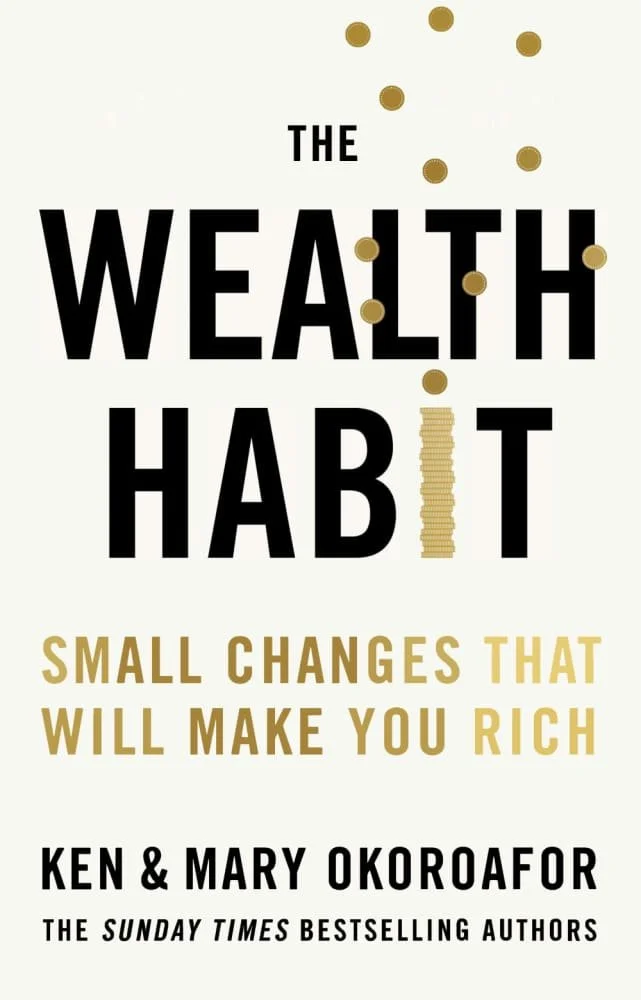
The Wealth Habit by Ken & Mary Okoroafer | Start small. Repeat often. Let the habit lead the way.
Over time, they reinforce identity: you start to see yourself as someone who is in control of their finances.
Earning more starts with a shift in identity
Increasing income is not only about career progression.
“The very first thing to do is to make your first £1.”
That first step, however small, changes how you see yourself.
“See yourself as a value creator.”
This can start with simple, service-based ideas using skills you already have. From there, it can grow into something more scalable.
The key is not scale at the beginning, but proof.
Using AI to accelerate action
AI is changing how quickly ideas turn into reality.
“AI is helping us reduce the gap between ‘I want to do something’ and actually doing it.”
Tasks that once took months can now be done in hours.
AI can be used to:
Test ideas quickly
Build scenarios
Challenge assumptions
Improve productivity
“Any way that you can buy back time is a win.”
The advantage is not just knowledge, but speed and execution.
The reality of trade-offs
Building wealth requires trade-offs.
“You sometimes have to say more no’s than you might normally do.”
This can mean:
Spending less in the short term
Letting go of status-driven choices
Making different lifestyle decisions
“These things are not visible, but they give life a lot of meaning.”
Real wealth is often quiet. It shows up as time freedom, optionality, and peace of mind, not visible signals.
Key takeaways
Wealth is built through habits, not events
Identity shapes financial behaviour
Systems make progress consistent
Small actions compound over time
Income grows when you shift to value creation
Trade-offs are part of long-term financial security
Disclaimer: This content is for educational purposes only and does not constitute financial advice. With investing, your capital is at risk.
Resources
Order your copy of The Wealth Habit
The Humble Penny Website
Instagram: @thehumblepenny and @financialjoyacademy
Partner
AD | This episode is sponsored by Wealthify.
Wealthify makes investing simple by doing everything for you — from building your portfolio, to managing it on an on-going basis. Open your account at Wealthify.com.
With investing, your capital is at risk. Wealthify is authorised and regulated by the Financial Conduct Authority.